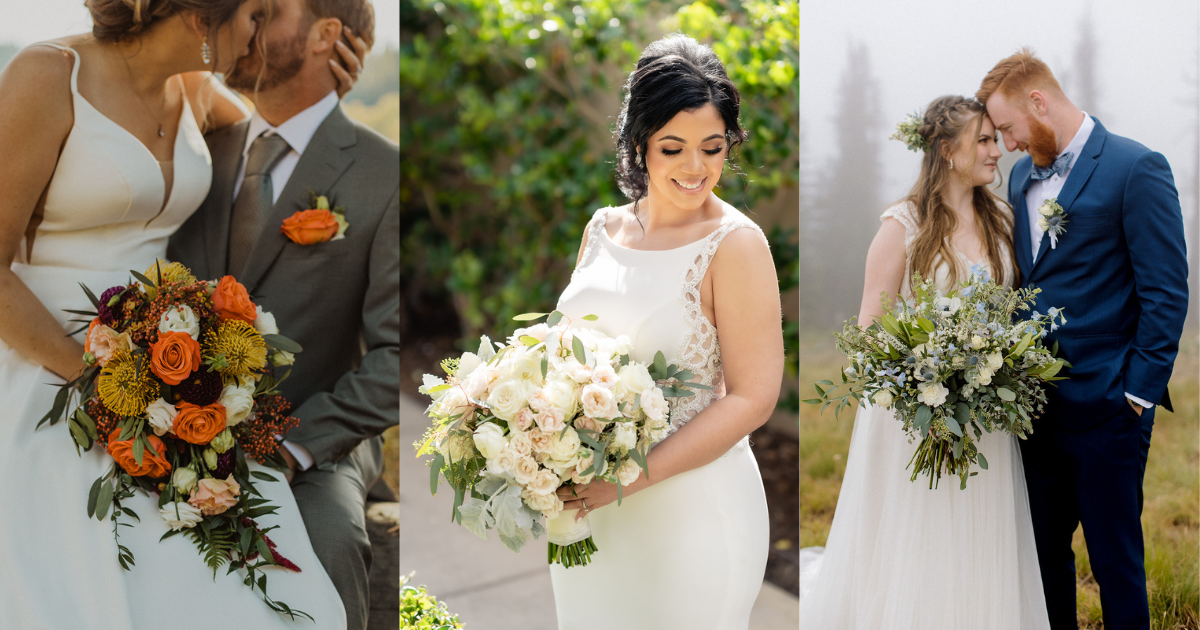
Besides your wedding gown, no other wedding detail says as much about your personality and style as your bridal bouquet.
Your bouquet will be in nearly every portrait, close-up, and ceremony photo from your wedding day. It’s one of the most personal floral pieces you’ll carry, and surprisingly, much of its overall look comes not just from the flowers themselves — but from how the bouquet is constructed.
Most couples don’t walk into wedding planning saying:
“I want a floral egg bouquet.”
Instead, they fall in love with a look:
- loose and organic
- tight and classic
- dramatic and cascading
- airy and movement-filled
- formal and structured
As a florist, my job is to choose the bouquet construction technique that best creates that desired outcome.
Here are the three primary methods we use to compose wedding bouquets — and how each one influences the final style, shape, and feel of your flowers.
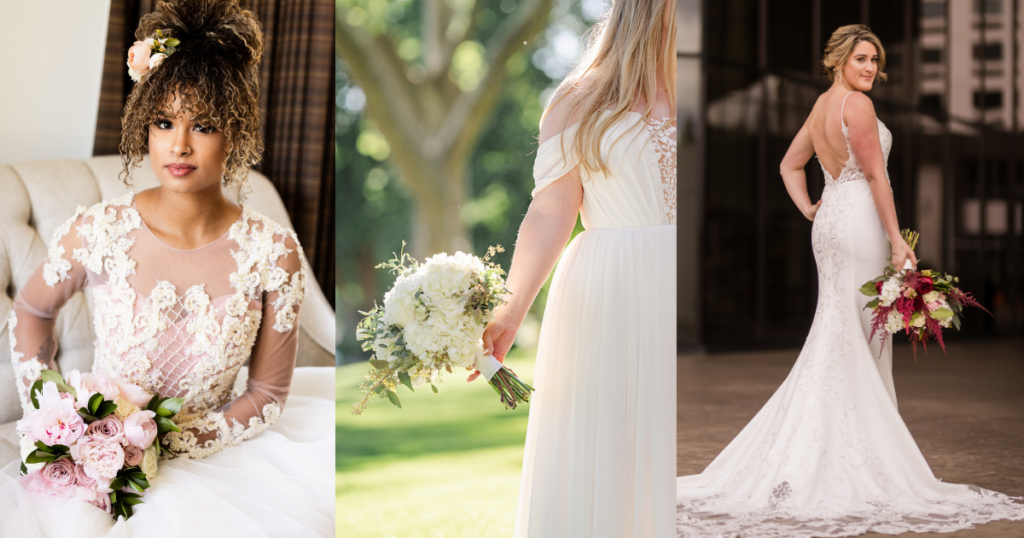
1. Hand-Tied Spiral Bouquet
The hand-tied spiral is one of the most classic bouquet construction techniques and creates the tightest, most compact floral arrangement.
In this method, stems are placed one at a time in a twisting spiral pattern, usually at a 45-degree angle. The bouquet is rotated slightly as each flower is added, creating a structured and balanced shape.
This style typically creates:
- a round bouquet shape
- tightly grouped blooms
- a polished and refined appearance
- a lightweight bouquet that’s easy to carry
Because the stems remain exposed, hand-tied bouquets are also easy to keep hydrated throughout the day by placing them back into water whenever possible.
This style tends to feel:
- classic
- formal
- elegant
- timeless
If you love compact, controlled floral designs where the flowers sit closely together, the hand-tied spiral may be the perfect fit.
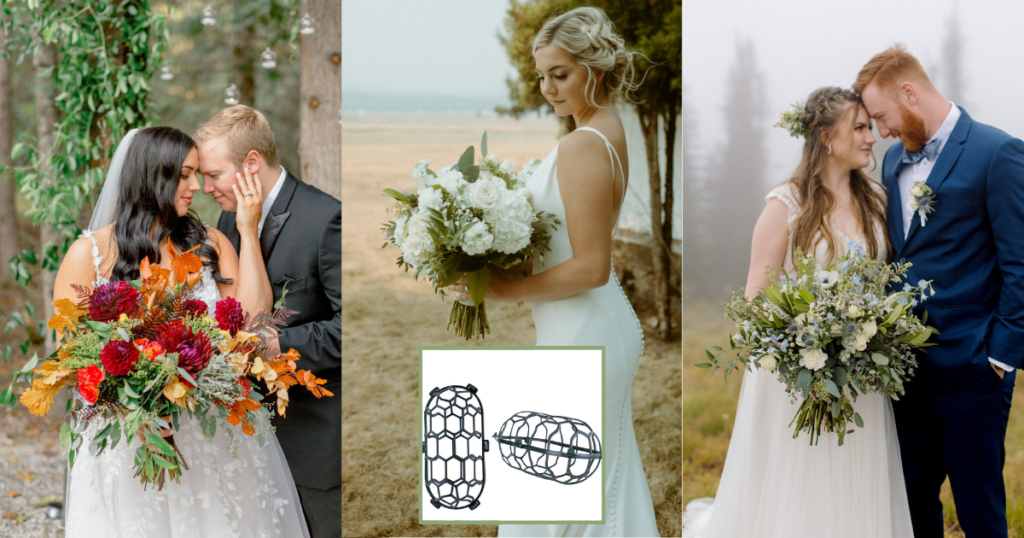
2. Floral Egg Bouquet (The Holly Chapple Egg)
This is the method I personally use for the majority of my bridal bouquets.
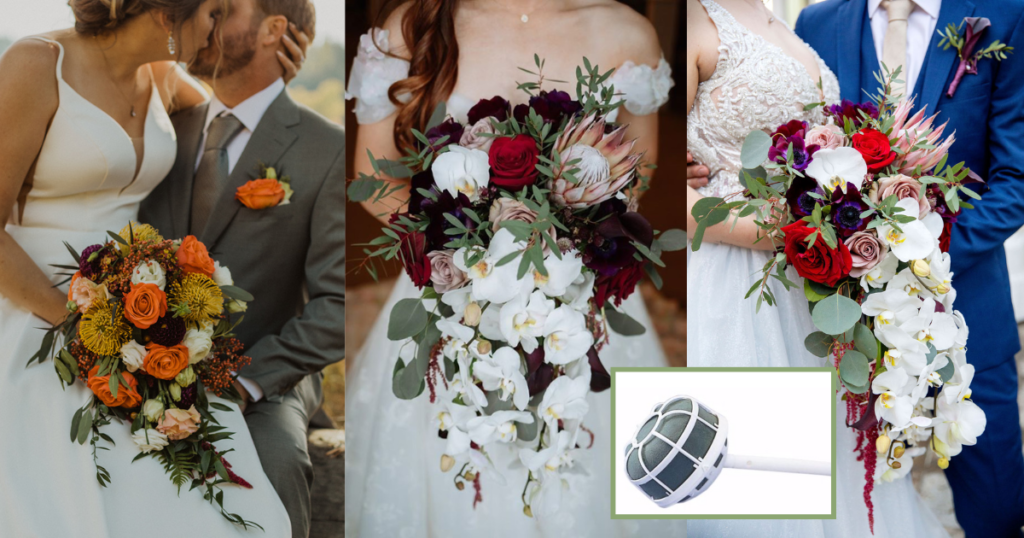
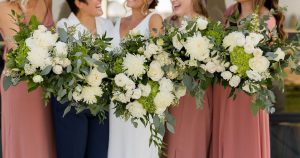
The floral egg creates a much looser, wider, more movement-driven bouquet shape compared to the tighter hand-tied spiral. I often describe the final look as a “football shape” — a wide oval silhouette with flowers and greenery naturally flowing outward.
This method became especially popular after floral designer Holly Chapple developed the now-famous plastic floral egg structure that many florists use today.
The floral egg allows for:
- airy spacing between blooms
- draping greenery
- movement and texture
- asymmetrical elements
- organic garden-style designs
This style is incredibly popular in modern weddings because couples today are often drawn to bouquets that feel:
- natural
- romantic
- loose
- whimsical
- editorial
- movement-filled
I especially love using this method when incorporating draping elements or creating those soft, free-flowing bouquets that photograph beautifully outdoors.
One added benefit is that the floral egg also helps protect the bouquet’s shape when setting it down throughout the wedding day.
3. Foam Holder / Cascading Bouquet
If you’re envisioning a dramatic cascading bouquet, this is typically the method I reach for.
A foam-holder bouquet uses water-soaked floral foam to anchor blooms into place, allowing for structured downward movement and more dramatic shaping.
This is the technique most commonly used for:
- cascading bouquets
- waterfall-style bouquets
- formal floral designs
- long draping greenery
- orchids and line flowers
- dramatic teardrop silhouettes
Cascade bouquets naturally feel more formal and traditional than loose garden-style bouquets. They create an elegant statement and often pair beautifully with more dramatic gowns or formal venues.
Because the foam retains water and supports longer draping elements, these bouquets can be slightly heavier than other bouquet styles.
One thing I always tell couples:
If you’re planning a bouquet toss, I generally don’t recommend tossing a foam-holder bouquet.
The water-soaked center can make the bouquet heavier and more rigid than hand-tied styles, and nobody wants to accidentally hit Grandma with a flying foam brick.
Bouquet Construction Is About the Outcome — Not the Technique
One thing most couples don’t realize is that they usually aren’t choosing bouquet mechanics directly.
They’re choosing:
- a shape
- a feeling
- a style
- an aesthetic
The florist then selects the construction method that best achieves that result.
For example:
- Tight, compact, rounded bouquets → usually hand-tied spiral
- Loose, airy bouquets with movement → usually floral egg
- Dramatic downward teardrop shapes → usually foam-holder cascade
That said, floral design is flexible. You can create a cascade using a floral egg, and you can use foam mechanics for non-cascading bouquets. Personally, I choose the technique that best supports the overall design vision.
The Part Couples Never See
Most couples — and especially most grooms — are surprised by how much engineering, mechanics, conditioning, and behind-the-scenes work go into professional wedding florals.
I often explain it like this:
You can buy a $10 steak at the grocery store and cook it yourself, or you can go to a high-end steakhouse where it’s expertly sourced, prepared, plated beautifully, and served as an experience.
Wedding flowers are similar.
Professional florists aren’t simply “putting flowers together.” We’re:
- sourcing specialty blooms
- conditioning flowers properly
- timing bloom stages
- engineering mechanics
- building structure
- hydrating arrangements
- transporting delicate products
- designing custom compositions for your wedding aesthetic
There’s far more artistry and technical work involved than most people realize.
Sometimes that even involves a few florist “Lilyisms.”
In floral design school, I learned one way to stabilize bouquet holders involved plumbing pipe and quick-set cement mounted into a base so the bouquet made on a foam holder could stand upright while designing. In my studio today, I actually use the base of a cocktail table for certain bouquet mechanics. Other florists use weighted vases with rocks.
It may not be glamorous, but it’s part of the behind-the-scenes creativity that helps turn flowers into art.
Final Thoughts: Start With the End Result
When choosing your wedding bouquet style, don’t get too caught up in floral mechanics or technical terminology.
Instead, start with the outcome:
- What shape do you love?
- What overall feeling are you drawn to?
- Do you want something formal and structured?
- Loose and organic?
- Dramatic and cascading?
- Soft and movement-filled?
Once you know the feeling and appearance you want, your florist can guide you toward the bouquet construction method that will bring that vision to life beautifully.
At the end of the day, the best bouquet composition isn’t about following a formula — it’s about creating flowers that feel authentically you.